
Training for Your Future Self
October is active aging month!

I’ve always had a deep admiration for older adults, but I developed a particular fondness for them while working in cardiac rehabilitation. The humor, the stories, the conversations, the relationships, the trials, and the triumphs were what life is made of—tenacity and grit mixed with tragedy, kindness, and humor.
As an exercise physiologist and Functional Aging Specialist, I began to see aging not as decline, but as design. We are architects of our aging process. Just like how I sculpted my body through bodybuilding, I watched them mold their future with their actions.
Through lifestyle, movement, and mindset, we can influence how our genes express themselves. This means that we can change how we age! Science calls this epigenetics—the remarkable ability of behavior, environment, and attitude to turn health-promoting genes “on” and disease-promoting genes “off.” Our lifestyle behaviors influence gene expression. Knowing that is so empowering.
In other words, we are not prisoners of our DNA or our environment. We’re participants in its expression. Wow.

The Art of Aging Well
Somewhere along the line, aging got a bad reputation. It became something to resist, conceal, or “anti-age.” I hate that. We need to change that, and wear our years as proof of participation in life to the fullest. Scars, stretch marks, and wrinkles aren’t imperfections—they’re history that was made. Each person has left their mark on earth, and those wrinkles prove it. Scars, wrinkles, imperfections, like one foot longer than the other, or a temperamental knee, show we’ve been injured, healed, went through trauma, restored, and we’re still here!
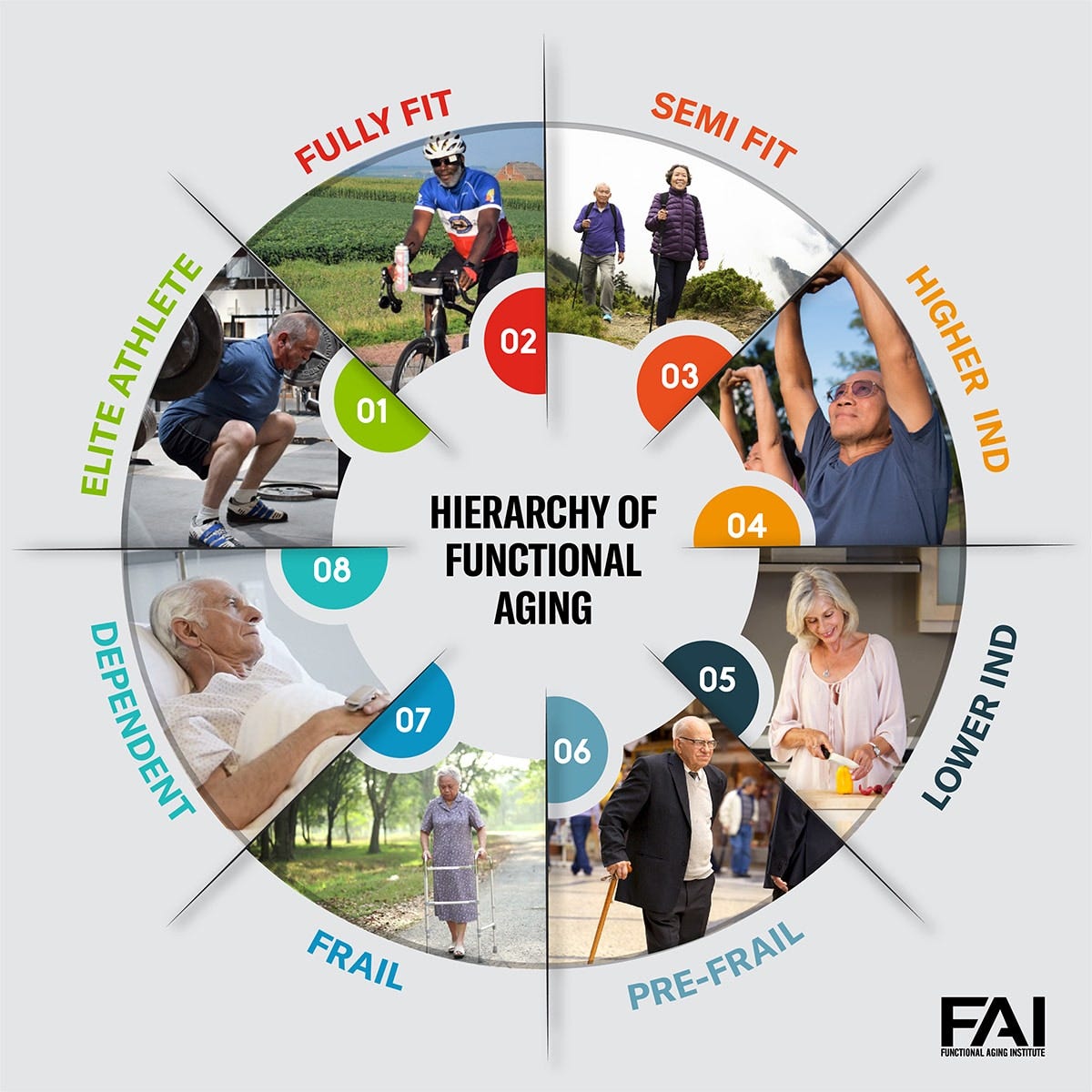
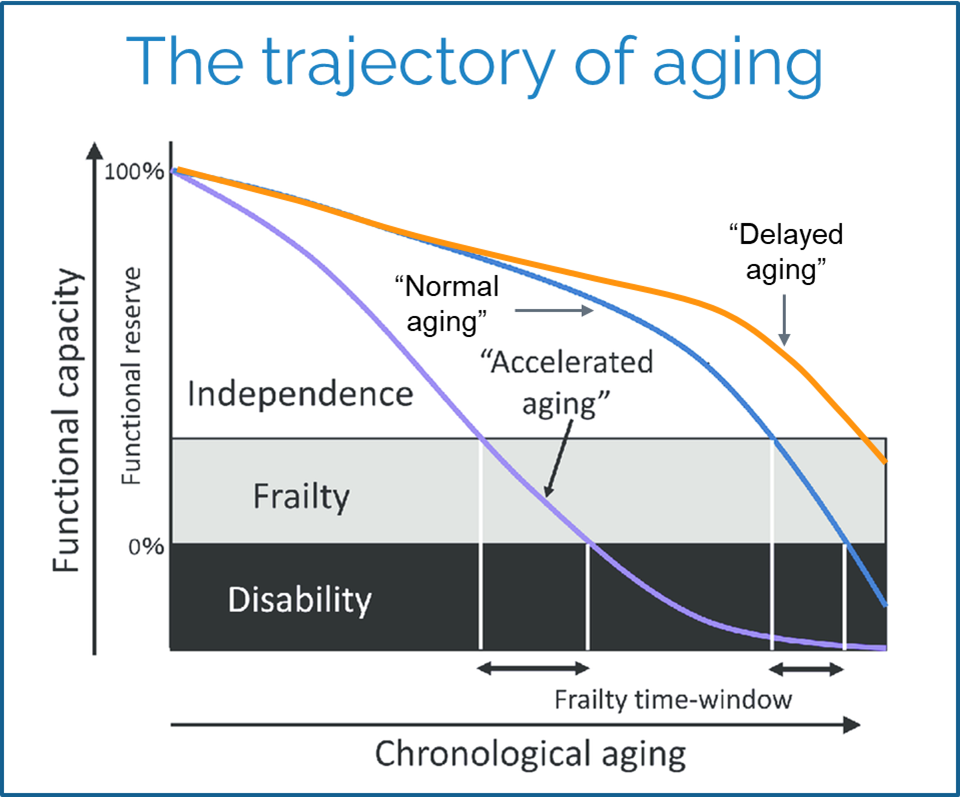
Functional aging, or aging to live at our best, invites us to embrace the notion that we can function to a great extent and not be limited by aging to the point of not enjoying life. We want to be above the horizontal line in the image below, not below it. But that takes focus on intention. To be above the line is for those who make it happen, not let it happen.
Heroes of Active Aging
Think about people like Johanna Quaas, the world’s oldest gymnast, who competed in her 90s with the composure of someone half her age. Or what about Dr. Charles Eugster, who began sprinting in his 80s and set world records before passing at 97—proof that it’s never too late to get faster, stronger, or better.
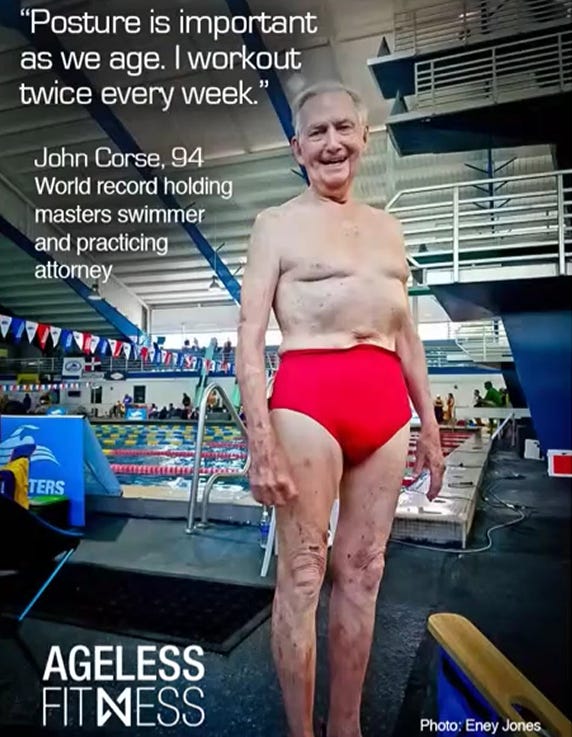
Then there’s Yvonne Dowlen, the figure skater who continued to perform into her 90s. You’ve got to see this video to believe it. I dare you not to tear up. And Jim Corse, who’s still living actively at 94. I also include my father-in-law, who, at 87, has just had his hip replaced so he can hike and bike the Poudre Trail. Notice, they don’t defy aging—they simply refused to let it stop them.
These individuals remind us that aging doesn’t steal vitality—inactivity does.

The Six Domains of Functional Longevity
When we talk about active aging, we’re really talking about functional longevity—the ability to do what you want to do, as late in life as possible. That’s the ultimate goal, don’t you think?
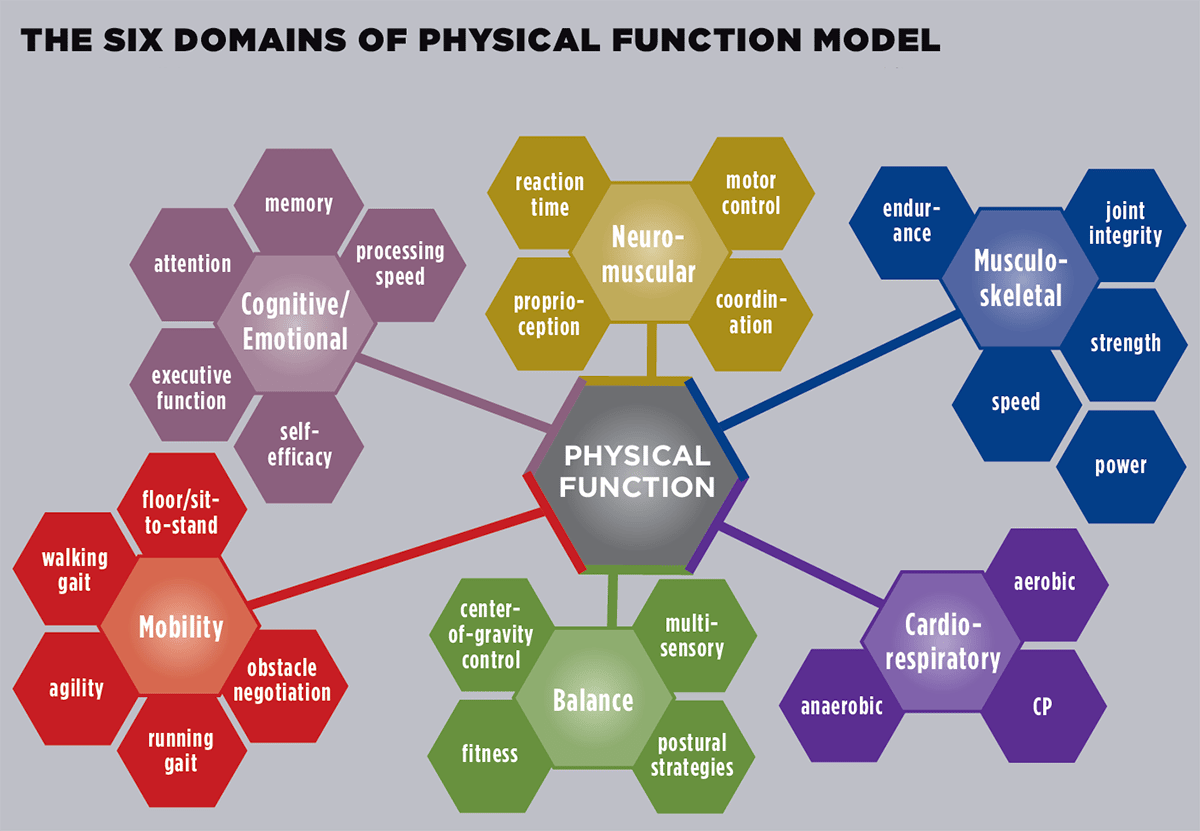
One way to look at it is to keep up the six domains of physical function:
Mobility – the foundation of independence.
Cognitive & Emotional Health – the drivers of memory, mood, and purpose.
Neuromuscular Control – coordination and reaction time.
Balance – the quiet skill that prevents life-changing falls.
Cardiorespiratory Endurance – stamina and heart health.
Musculoskeletal Strength – the support system for everything else.
Research shows that just 90 exercise sessions a year—less than two per week—can make measurable improvements in all six domains. That’s a modest investment with a profound return.
Body Fitness + Brain Fitness = Lucid Future You
More than six million Americans are living with Alzheimer’s today, and while there’s still much to learn, we know now that movement changes the brain. Exercise increases neurotrophic factors that promote brain plasticity, enhance memory, and protect against cognitive decline.
That’s why when I train my clients, I don’t just train bodies—I train brains. I am even a Brain Fitness Coach. Simply put, this means working your brain and body simultaneously. Your mental capability is as trainable as physical strength. If you know that, then you know you can do something about age-related dementia, like Alzheimer’s disease.
Designing the Trajectory of Aging
Whether you want to keep working, gardening, traveling, or mentoring, exercise enhances every one of those goals. The way you move now influences how you’ll live later. Each stretch prepares you for reaching farther. Each walk conditions your future independence. Each decision to care for your body reaffirms the message to your genes: I’m still in the game. I’m not done yet!
Aging is not a passive process—it’s a trajectory you can steer. Your goal is to be the orange line, “Delayed aging.”
Become a Super-Ager
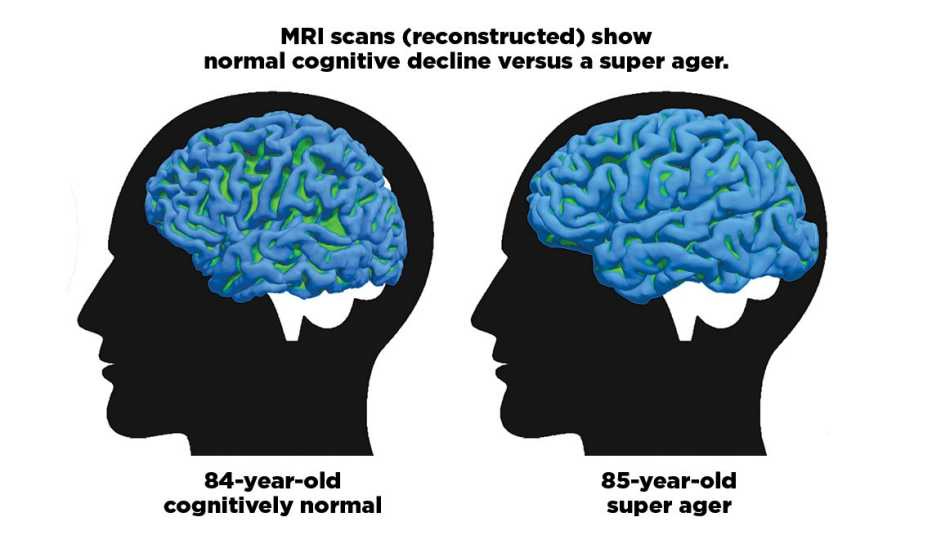
There’s a rare group of older adults called superagers whose brains seem to defy time. While most of us experience gradual memory decline with age, superagers in their seventies and eighties perform on memory tests like people decades younger.
Neuroscientists have discovered that parts of their brains—especially the anterior cingulate cortex, which helps regulate emotion, attention, and motivation—remain thicker and more active than expected for their age. But what fascinates me most isn’t only their biology; it’s their behavior. Superagers aren’t floating through life with perfect genes or luck. They push themselves—physically, mentally, and socially—far beyond their comfort zone. They take dance classes when it would be easier to walk, have long conversations when silence would suffice, and lean into challenges that most of us instinctively avoid. They push it.
That effort is their secret. Their brains thrive not in spite of the discomfort, but because of it. Effort builds resilience, and resilience keeps the brain young. It’s a reminder that aging well isn’t about preservation; it’s about participation. The same principles that keep our bodies strong—movement, connection, curiosity, and purpose—are what keep our minds vibrant. Superagers seem to have mastered the art of staying in motion while staying fully engaged in life.
The Shift in Perspective
It’s true, we can’t control time, but we can control trajectory. We also can’t rewrite our genes, but we can influence how they behave. And we can’t stop aging. But we can do something. It’s the next thing that we do that can make the difference.
As you age, wear your years proudly. and move often and try new things. Train your body and don’t be afraid to push it a little. Think of this as an aging strategy. How do you want to age? Set the vision, and then aim for it. Aging isn’t all blind luck. It’s a lot of strategy. That’s what I call Strategic Action Health!
In good health,
Dr. Alice

The Health Shift, by Strategic Action Health
Dr. Burron is a co-founder of Strategic Action Health, dedicated to helping organizations help their employees make better health decisions. Come check us out here!
Catch us on Instagram: @the.health.navigator and @dr_burron
You can also connect on LinkedIn 👓
And if you’re not subscribed to Health Shift here on Substack, don’t you think it’s time?! This free newsletter is packed with valuable information and approaches to help you on your journey to better, faster healing.
Please share — people NEED to have the tools and resources to take ownership over their health. Thank you!